A Typical Day in the Life of a French Person
Reading time: 16 min
You’ve learned French for years.
You can read books. You understand podcasts. You know a lot of vocabulary.
But when you arrive in France and try to live like a French person, something feels different.
The rhythm is different.
The timing is different.
Even simple things — when people eat, when they work, when they relax — don’t always match what you expected.
The real problem:
Learning French is not only about words and grammar.
It’s also about understanding the rhythm of French life.
And when you understand that rhythm, you understand French people better.
Today, I’m going to show you what a real French day actually looks like.
Not the textbook version.
The real version.
With the routines, the vocabulary, the expressions people actually use, and the cultural details that make France… France.
Morning: un début de journée plutôt tranquille
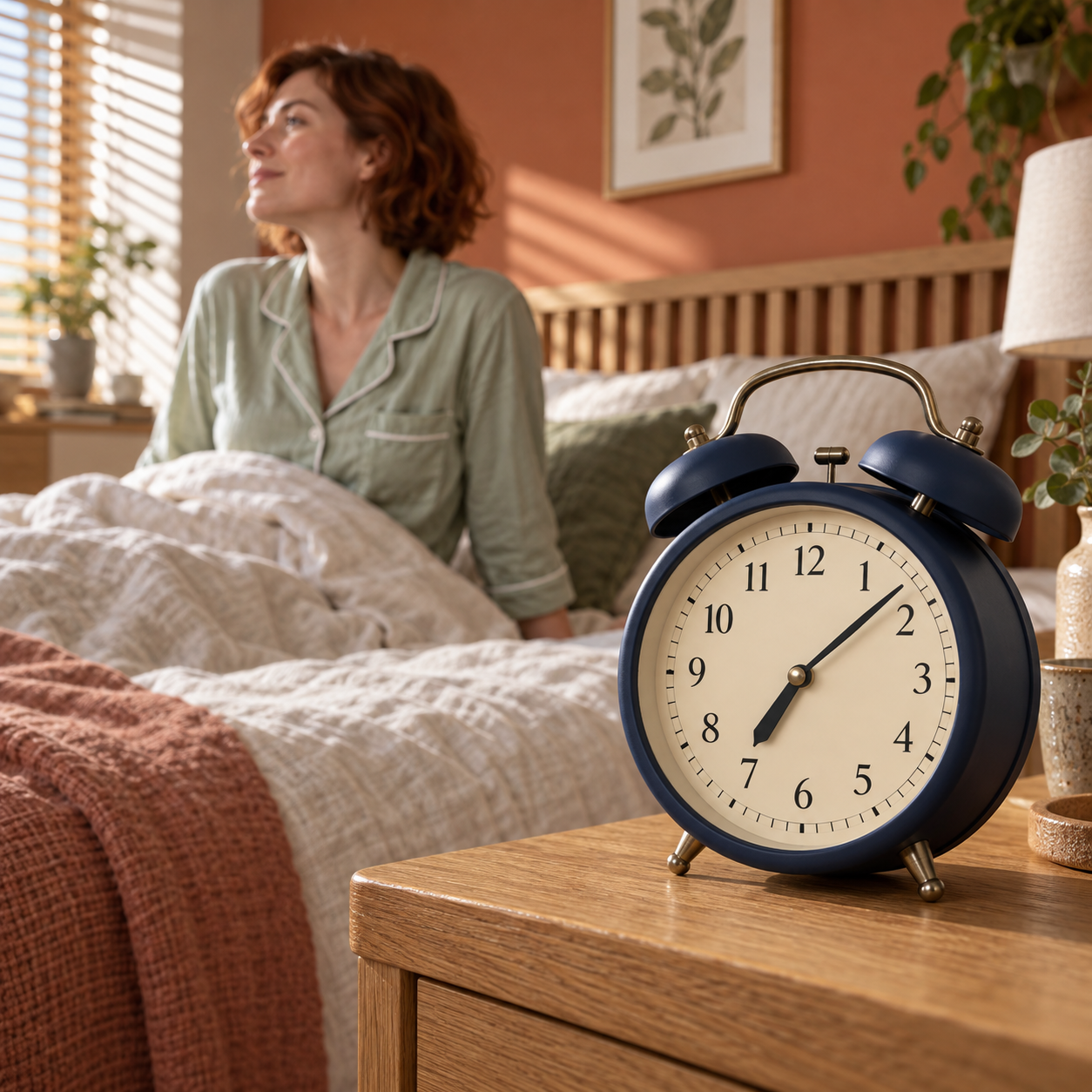
A typical French day usually starts between 6:30 and 8:00 AM.
Of course, it depends on the person.
Some people wake up early because they have a long commute.
Others wake up later because they work from home or live close to their workplace.
But one thing is common: French mornings are often practical and quick.
Useful morning vocabulary:
Se réveiller = to wake up
L’alarme = the alarm
Tôt = early
Tard = late
Real phrase:
“Je me réveille à 6h30, mais je traîne un peu au lit.”
(I wake up at 6:30, but I linger in bed a bit.)
Breakfast: le petit-déjeuner
French breakfast is usually light and sweet.
It’s not a big, heavy meal.
It’s quick. Sometimes very quick.
Some French people eat standing up. Some eat while checking their phone. Some just drink coffee and leave.
A typical French breakfast can include:
- Une tartine de pain avec du beurre et de la confiture = a slice of bread with butter and jam
- Des céréales = cereal
- Un croissant = a croissant
- Un pain au chocolat = a chocolate pastry
- Une baguette = a baguette
- Un café noir = black coffee
- Un thé = tea
- Un chocolat chaud = hot chocolate
And yes, pain au chocolat is sometimes called chocolatine in some regions.
But careful.
That debate can become very serious in France.
Real phrases:
“Je prends juste un café et une tartine le matin.”
(I just have coffee and toast in the morning.)
“Je n’ai pas faim le matin.”
(I’m not hungry in the morning.)
“Je prends un croissant à la boulangerie avant le travail.”
(I grab a croissant from the bakery before work.)
Important cultural point:
French people usually don’t sit down for 30 minutes to eat breakfast.
It’s often 5 to 10 minutes.
Quick. Simple. Sweet.
Getting to work or school
After breakfast, French people go to work, school, university, or appointments.
In big cities like Paris, Lyon, or Marseille, many people use public transportation.
In smaller towns or in the countryside, people often drive.
Useful transportation vocabulary:
Les transports en commun = public transportation
La voiture = car
Le vélo = bike
À pied = on foot
Les bouchons = traffic jams
Real phrases:
“Je prends le métro pour aller au travail.”
(I take the metro to go to work.)
“Je dois prendre le bus à 7h45.”
(I have to catch the bus at 7:45.)
“Il y a des bouchons ce matin.”
(There’s traffic this morning.)
“Je fais du covoiturage avec mes collègues.”
(I carpool with my coworkers.)
Most jobs start around 8 or 9 AM.
And many people finish around 6 or 7 PM.
But between those two moments, there is something very important in France.
Lunch.
Midday: une vraie pause déjeuner
In France, lunch is not just “fuel”.
Lunch is a real break.
And for many French people, it’s one of the most important moments of the day.
This often surprises foreigners:
In France, people often take at least one hour for lunch.
Sometimes more.
It’s not always a quick sandwich eaten in front of a computer.
Useful lunch vocabulary:
La pause déjeuner = lunch break
Déjeuner = lunch / to have lunch
Manger = to eat
Avoir faim = to be hungry
Une brasserie = a casual restaurant or bistro
La cantine = cafeteria
What does a typical French lunch look like?
A complete French lunch can include several parts.
Une entrée = appetizer
- Une salade = salad
- Une soupe = soup
- De la charcuterie = cold meats
- Du pâté = pâté
Un plat principal = main course
- De la viande = meat
- Du poisson = fish
- Des pâtes = pasta
- Des légumes = vegetables
Parfois un dessert = sometimes dessert
- Un fruit = fruit
- Un yaourt = yogurt
- Une pâtisserie = pastry
- Une glace = ice cream
Real lunch conversation:
“Qu’est-ce que tu prends ?”
(What are you having?)
“Je vais prendre une salade et du poisson.”
(I’ll have a salad and fish.)
“C’est bon ?”
(Is it good?)
“Oui, c’est délicieux !”
(Yes, it’s delicious!)
“Un café après ?”
(Coffee after?)
In French schools, lunch is serious too
French school cafeterias usually serve structured meals.
Children don’t just eat something random quickly.
They often have:
- une entrée
- un plat principal
- du fromage
- un dessert
Because in France, eating well matters.
Even for kids.
Afternoon: work and la pause-café
After lunch, French people go back to work or class.
Then, around 4 or 5 PM, many people take a short coffee break.
Useful coffee break vocabulary:
La pause-café = coffee break
Prendre un café = to have a coffee
Discuter = to chat / discuss
Les collègues = coworkers
Se détendre = to relax
Real phrase:
“On prend un café ?”
(Want to grab a coffee?)
This break is not just about caffeine.
It’s a moment to talk with coworkers, breathe a little, and recharge before the end of the workday.
For kids: l’heure du goûter
For French children, 4 PM is very important.
It’s time for le goûter.
And yes, le goûter is almost sacred.
A typical goûter can include:
- Un chocolat chaud = hot chocolate
- Des biscuits = cookies
- Une tartine = a slice of bread with jam or chocolate spread
- Un pain au chocolat = chocolate pastry
- Un fruit = fruit
- Un yaourt = yogurt
Real parent phrases:
“Tu as goûté ?”
(Did you have your snack?)
“Je veux un pain au chocolat !”
(I want a chocolate pastry!)
Evening: détente et dîner en famille
French people usually have dinner between 7 and 9 PM.
It depends on the family, the region, the work schedule, and the habits of the household.
Useful dinner vocabulary:
Dîner = dinner / to have dinner
Manger en famille = to eat as a family
Copieux = hearty / generous
Délicieux = delicious
Avoir faim = to be hungry
Dinner can be structured like lunch.
There may be an appetizer, a hot dish, cheese, and sometimes dessert.
But the most important thing is this:
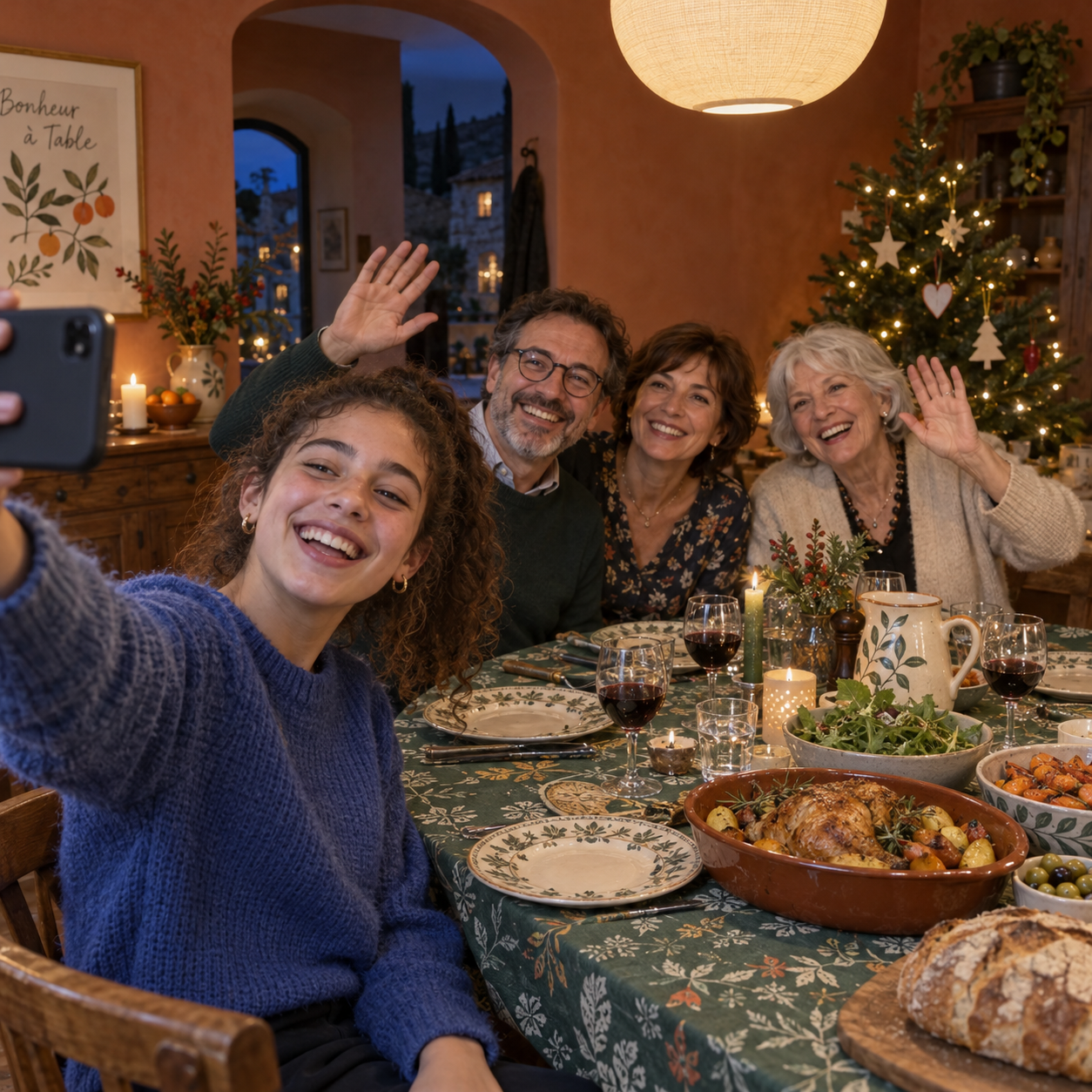
Dinner is a moment of connection.
Families sit together, talk about their day, and share food.
Real dinner conversation:
“Comment s’est passée ta journée ?”
(How was your day?)
“C’était bien, on a eu une réunion importante.”
(It was good, we had an important meeting.)
“C’est bon ?”
(Is it good?)
“Oui, c’est délicieux !”
(Yes, it’s delicious!)
After dinner
After dinner, French people often relax.
They may watch TV, read, chat, or go out.
- Regarder la télévision = to watch TV
- Lire = to read
- Discuter = to chat
- Sortir = to go out
Typical evening phrases:
“On regarde quoi ce soir ?”
(What are we watching tonight?)
“Je vais regarder le journal télévisé.”
(I’m going to watch the news.)
“Tu veux un verre ?”
(Want a glass of wine?)
Weekend: un rythme plus détendu
Weekends in France often have a slower rhythm.
People sleep in.
They take their time.
Breakfast can be more generous.
And meals are often longer.
Weekend vocabulary:
- On dort plus tard = we sleep in
- On prend le temps = we take our time
- Du sport = exercise
- Du shopping = shopping
- Des balades = walks
- On invite des amis = we invite friends
- On mange au restaurant = we eat out
Sunday is also important in many families.
Le repas dominical, the Sunday family meal, can be one of the biggest meals of the week.
Real weekend phrase:
“Dimanche, on fait un grand repas de famille.”
(On Sunday, we have a big family meal.)
Why understanding a French day matters
A typical French day tells you a lot about French culture.
French people value eating well.
They value taking time.
They value family connection.
They value real breaks.
And they often prefer quality over speed.
That’s the bigger picture.
When you understand the rhythm of French life, you don’t just understand the language better.
You understand the people better.
Next step: speak about your French day like a real Frenchie
Now you know how French people structure their days.
But here’s the truth:
Knowing and doing are different things.
You can read about French meal times.
You can understand the vocabulary.
You can recognize the patterns.
But the moment someone asks you:
“Comment s’est passée ta journée ?”
(How was your day?)
at a dinner table in France, you need to respond naturally.
Without thinking.
Without translating.
You need to talk about:
- what time you woke up,
- what you had for breakfast,
- your commute,
- your lunch break,
- your work,
- your afternoon,
- your dinner plans.
That’s the difference between learning French and living French.
You don’t just want to know how French people live.
You want to be able to talk about real life in French.
That’s why you need to practice your French
At Ohlala French School, we don’t just teach you vocabulary about daily life.
We help you live it through conversation.
You can practice in French around real-life themes like:
- “Talk about a typical French day”
- “Discuss meal times and food culture”
- “Chat about your weekend plans”
- “Debate work-life balance in France”
After each conversation, you get real feedback.
Not just “good job”.
Real feedback on:
- what you said well,
- where you hesitated,
- how to say it more naturally,
- how French people actually phrase things.
After a few weeks of real practice…
You won’t just be learning about French daily life.
You’ll start living it.
You’ll understand the rhythm, the pacing, the interruptions, the way people talk about meals, work, family and plans.
And when you arrive in France — or talk with French people online — you won’t sound like someone studying French from a textbook.
You’ll sound like someone who actually understands France.
Your 7-day free trial starts now
No commitment.
No credit card.
Just 7 days of real conversation with native French speakers.
You pick the topics.
You practice speaking.
You get feedback.
You see real progress.
→ Start your free 7-day trialSummary: a typical French day
6:30-8:00 AM: Wake up and light breakfast.
8:00-9:00 AM: Commute to work or school.
12:00-2:00 PM: Long lunch break.
4:00-5:00 PM: Coffee break for adults, goûter for children.
6:00-7:00 PM: End of work or school.
7:00-9:00 PM: Dinner with family.
9:00 PM-midnight: TV, reading, chatting, relaxing.
Weekend: Slower rhythm, family meals, walks, leisure activities.
Learn the vocabulary.
Understand the culture.
Then practice talking about real life in French.
That’s how French starts to feel natural.