18
PENSER
(to think)
Penser is everywhere in conversations because French people constantly express opinions, doubts, ideas, and emotions.
Useful everyday expressions include : "J'y pense." (= I’m thinking about it.) "Tu penses à quoi ?" (= What are you thinking about?) "Penses-y." (= Think about it.)
Another common phrase is : "J'en pense rien."
That means : “I don’t have an opinion on it.”
French people also use : "Je pense que..." all the time, especially in more neutral conversations.
For example : "Je pense qu'il va pleuvoir." (= I think it’s going to rain.)
And in spoken French, you’ll often hear : "Tu penses !"
Depending on the tone, it can mean something like : “Obviously!” or “Of course!”
Mini-dialogue :
— "Tu penses à quoi ?"
(= What are you thinking about?)
— "Je pense à mes vacances."
(= I’m thinking about my vacation.)
— "Ah oui ? Tu pars où ?"
(= Oh really? Where are you going?)
— "Chais pas encore, j'y pense justement."
(= I don’t know yet, I’m thinking about it right now.)
19
CROIRE
(to believe / to think)
"Tu crois ?" means “You think so?”
French people use this constantly in conversations when reacting to information.
"J'y crois pas" means “I can’t believe it.”
And : "Je crois que oui" means “I think so.”
There’s a subtle difference between "penser" and "croire".
"Penser" often sounds more logical or rational.
"Croire" feels more instinctive or emotional.
For example : "Je crois qu'il est sympa." (= I think he seems nice.)
You’ll also hear : "Faut pas croire."
That roughly means : “Don’t assume that.”
Mini-dialogue :
— "Il va vraiment venir ?"
(= Is he really coming?)
— "Je crois que oui."
(= I think so.)
— "Franchement, j'y crois pas."
(= Honestly, I don’t believe it.)
20
VOIR
(to see)
"On verra" is one of the most French expressions you’ll ever hear.
It means : “We’ll see.”
Sometimes it’s optimistic. Sometimes it’s just a polite way to avoid committing.
French people also constantly say : "Tu vois ?"
That means : “See?” or “You know what I mean?”
"Ça se voit" means “It shows.”
And : "Rien à voir" means “Nothing to do with it.”
For example : "Ça n'a rien à voir." (= That has nothing to do with it.)
Mini-dialogue :
— "Tu crois qu'il va pleuvoir ?"
(= Do you think it’s going to rain?)
— "On verra."
(= We’ll see.)
— "Bah regarde le ciel, ça se voit quand même."
(= Come on, look at the sky, it’s obvious.)
Part 3 — Everyday verbs : verbs 21 to 40
These are the verbs of daily life.
The ones you’ll hear from breakfast to bedtime.
Maybe they look simple on paper, but they are absolutely everywhere in natural French conversations.
21
MANGER
(to eat)
Simple, but essential.
Useful expressions : "On mange quoi ?" (= What are we eating?)
"J'ai trop mangé" (= I ate too much.)
And : "On se fait à manger ?"
That means : “Shall we make something to eat?”
22
PARLER
(to speak)
Important expressions include : "On en parle", "N'en parlons plus", "Tu parles !", and "Sans parler de..."
"Tu parles !" can be sarcastic, like “Yeah, right!”
French people also use : "Ça parle de quoi ?"
That means : “What is it about?”
23
AIMER
(to love / to like)
This one is extremely important culturally.
"J'aime" is strong.
"J'aime bien" is softer.
Oddly enough, adding "bien" makes the sentence LESS intense.
"J'aimerais bien" means “I’d like to.”
24
CONNAÎTRE
(to know someone / something)
"Tu connais ?" means “Do you know it/them?”
"Je connais un bon resto" means “I know a good restaurant.”
Important difference :
"savoir" = facts, information, skills.
"connaître" = people, places, things you know through experience.
25
ATTENDRE
(to wait)
"Attends" is everywhere in spoken French.
Useful expressions include : "J'attends depuis une heure", "Ça peut pas attendre ?", and "Attends, j'ai pas compris".
French people often say "Attends" even when they don’t literally mean “wait.”
Sometimes it simply means : “Hold on,” “Hang on,” or “Let me think.”
26
ACHETER
(to buy)
"J'ai acheté un truc" is an extremely natural sentence in spoken French.
French people constantly use "un truc" (= a thing / stuff) for almost everything.
For example : "J'ai acheté un truc pour la cuisine." (= I bought something for the kitchen.)
You’ll also hear : "acheter en ligne" (= to buy online) and "acheter d'occasion" (= to buy second-hand).
27
TRAVAILLER
(to work)
"Je travaille" is perfectly correct.
But in real spoken French, you’ll very often hear : "je bosse".
For example : "Tu bosses où ?" (= Where do you work?)
"bosser" is informal, but extremely common.
French people also say : "J'ai trop de boulot" (= I have too much work.)
28
RENTRER
(to go home / to come back)
"Je rentre" means “I’m going home.”
In natural French, people rarely say "je vais à la maison" in this situation.
You’ll hear : "Je rentre du boulot" (= I’m coming home from work.)
Or : "Tu rentres quand ?" (= When are you coming home?)
29
DORMIR
(to sleep)
Useful expressions include : "J'ai mal dormi", "Je dors debout", and "Tu as bien dormi ?"
"Je dors debout" literally means “I’m sleeping standing up.”
In reality, it means : “I’m exhausted.”
30
FINIR
(to finish)
You’ll constantly hear : "T'as fini ?" (= Are you done?)
"J'ai pas fini !" (= I’m not finished!)
And : "On finit par s'y habituer"
That means : “You eventually get used to it.”
31
COMMENCER
(to start)
"On commence ?" is very useful in daily conversations.
And : "Ça commence à m'énerver" means “It’s starting to annoy me.”
French people also say : "Ça commence bien".
Sometimes sincerely. Sometimes sarcastically.
32
ESSAYER
(to try)
"J'essaie" and "j'essaye" both exist.
But "j'essaie" is extremely common in spoken French.
"Essaie !" means “Try!”
For example : "Essaie encore." (= Try again.)
33
DEMANDER
(to ask)
"Je me demande" means “I wonder.”
"Demande-lui" means “Ask him/her/them.”
French people also say : "Je vais demander." (= I’ll ask.)
And : "Demande pas pourquoi." (= Don’t ask why.)
34
RESTER
(to stay / to remain)
Useful expressions : "Tu restes ?", "Reste !", and "Il reste du pain ?"
"Il reste..." is extremely useful for talking about what is left.
For example : "Il reste combien de temps ?" (= How much time is left?)
35
TOMBER
(to fall)
"Je suis tombé" means “I fell.”
But : "tomber sur quelqu'un" means “to run into someone.”
"Bien tomber" means “good timing.”
For example : "Tu tombes bien." (= Your timing is perfect.)
36
APPELER
(to call)
"Je t'appelle" means “I’ll call you.”
"Comment ça s'appelle ?" means “What’s it called?”
A very common phrase is : "Je te rappelle."
That means : “I’ll call you back.”
37
CHERCHER
(to look for)
"Je cherche" means “I’m looking for.”
"Cherche pas" can mean “Don’t bother” or “Don’t overthink it.”
French people also say : "Je cherche mes clés." (= I’m looking for my keys.)
38
CHANGER
(to change)
Useful expressions include : "Ça change rien", "Ça change !", and "Pour changer".
"Pour changer" is often sarcastic.
For example : "Il est encore en retard, pour changer."
(= He’s late again, what a surprise.)
39
JOUER
(to play)
"Tu joues à quoi ?" and "On joue un peu ?" are simple but useful.
In informal French, "Ça joue" can mean “That works.”
For example : "20h, ça joue pour toi ?"
(= Does 8 PM work for you?)
40
OUVRIR
(to open)
"C'est ouvert ?", "Ouvre la fenêtre", and "T'ouvres pas la bouche" are all common expressions.
"T'ouvres pas la bouche" literally means “Don’t open your mouth.”
In reality, it means : “Don’t say a word.”
Part 4 — Secret weapons : verbs 41 to 50
These verbs make the difference between “correct French” and real spoken French.
They appear constantly in natural conversations and idiomatic expressions.
41
TENIR
(to hold)
"Tiens !" can mean “Here!” when giving something to someone.
But depending on the tone, it can also mean : “Oh really?” or “Well, look at that.”
"Je tiens à toi" means “I care about you.”
"Ça tient la route" means “That makes sense” or “That holds up.”
French people also say : "Tiens-moi au courant."
(= Keep me updated.)
Mini-dialogue :
— "Tu crois que son projet va marcher ?"
(= Do you think his project will work?)
— "Oui, franchement, ça tient la route."
(= Yeah honestly, it makes sense.)
42
LAISSER
(to leave / to let)
"Laisse tomber" is one of the most French expressions ever.
It means : “Forget it” or “Drop it.”
"Laisse-moi tranquille" means “Leave me alone.”
And : "Laisse-moi réfléchir" means “Let me think.”
French people use "laisse" constantly in everyday speech.
Mini-dialogue :
— "J'arrive pas à réparer ça."
(= I can’t fix this.)
— "Laisse tomber, on verra demain."
(= Forget it, we’ll see tomorrow.)
43
PLAIRE
(to please / to like)
"Ça te plaît ?" means “Do you like it?”
"Ça me plaît bien" means “I really like it.”
And of course : "S'il te plaît" (= please).
This verb works differently from English.
Literally, the thing is “pleasing to you.”
For example : "Ce film me plaît."
(= I like this movie.)
44
MANQUER
(to miss)
Careful : this one traps almost every learner.
"Tu me manques" means “I miss you.”
The structure is reversed compared to English.
Literally : “You are missing to me.”
You’ll also hear : "Ça m'a manqué."
(= I missed that.)
And : "J'ai raté le train" is often used instead of "manquer le train" in spoken French.
45
ARRÊTER
(to stop)
"Arrête !" means “Stop it!”
"J'arrête pas d'y penser" means “I can’t stop thinking about it.”
"On s'arrête là" means “Let’s stop here.”
French people also constantly say : "Arrête un peu."
Depending on the tone, it can mean : “Come on,” “Stop exaggerating,” or “You’re kidding.”
46
SUIVRE
(to follow)
"Tu me suis ?" can literally mean “Are you following me?”
But very often, it means : “Do you understand what I mean?”
Teachers use this expression all the time.
French people also say : "Je suis perdu."
(= I’m lost / I’m confused.)
And : "J'arrive plus à suivre."
(= I can’t keep up anymore.)
47
SENTIR
(to smell / to feel)
"Ça sent bon" means “That smells good.”
"Tu te sens comment ?" means “How are you feeling?”
"Je le sens pas" means “I have a bad feeling about it.”
French people also say : "Je sens que..."
(= I feel that... / I have a feeling that...)
For example : "Je sens qu'on va être en retard."
(= I feel like we’re going to be late.)
48
SERVIR
(to serve / to be useful)
"Ça sert à rien" means “It’s useless.”
"Ça sert à quoi ?" means “What’s the point?”
"Je me sers" means “I’ll help myself.”
This verb is extremely common in spoken French.
For example : "Ça peut servir."
(= That could be useful.)
49
RAPPELER
(to call back / to remind)
"Je te rappelle" means “I’ll call you back.”
"Ça me rappelle" means “That reminds me.”
"Rappelle-moi de..." means “Remind me to...”
For example : "Rappelle-moi d'acheter du pain."
(= Remind me to buy bread.)
50
VIVRE
(to live)
"On vit qu'une fois" means “You only live once.”
"Vivre en France" means “to live in France.”
French people also say : "C'est facile à vivre."
(= It’s easy to live with.)
And : "Il faut profiter de la vie."
(= You have to enjoy life.)
You probably already knew these verbs… so what’s missing?
Let’s be honest.
You probably already knew most of these 50 verbs.
Maybe not perfectly.
But you had already seen them before.
So why does real conversation still feel difficult sometimes?
Because knowing a verb is not the same thing as being able to use it instantly.
Real spoken French happens fast.
People don’t wait for your brain to conjugate quietly in the background.
That’s why conversation practice matters so much.
When a French person speaks to you, your brain has to react in real time.
You hear the sentence.
You search for the correct verb.
You try to conjugate it.
You build the sentence.
And suddenly… the conversation has already moved on.
That’s the real challenge of spoken French : speed, fluidity, and automatic recall.
How to make these verbs become automatic
You don’t become fluent by memorizing giant lists forever.
You become fluent by using the same useful verbs again and again in real situations.
That’s exactly how native speakers learned them too.
Through repetition.
Through emotion.
Through conversations.
Little by little, your brain stops translating… and starts reacting naturally in French.
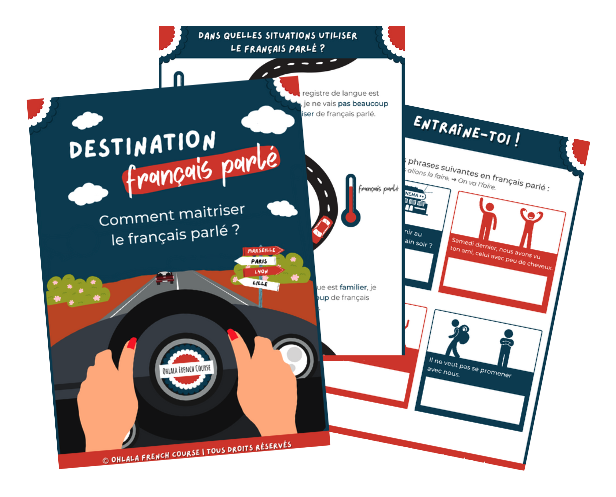
Want to practice spoken French every day?
I created a free 30-day French speaking challenge.
Every day, you receive one short email with one small practical exercise.
Not to study more grammar.
To actually USE French.
30 days.
One practical speaking exercise a day.
Simple, short, and realistic.
👉 Join the free challenge
The verbs you learned today are only useful if they leave your head… and enter your conversations.
That’s when French starts becoming real.
That’s when you stop “studying French”… and start actually living in French.