10 EXPRESSIONS TO TALK ABOUT A HEATWAVE IN FRENCH
Speak Like a French Person When It's Hot
Summer in France is magical. The cafés, the holidays, the amazing food...
But there's ONE word you'll hear everywhere: CANICULE.
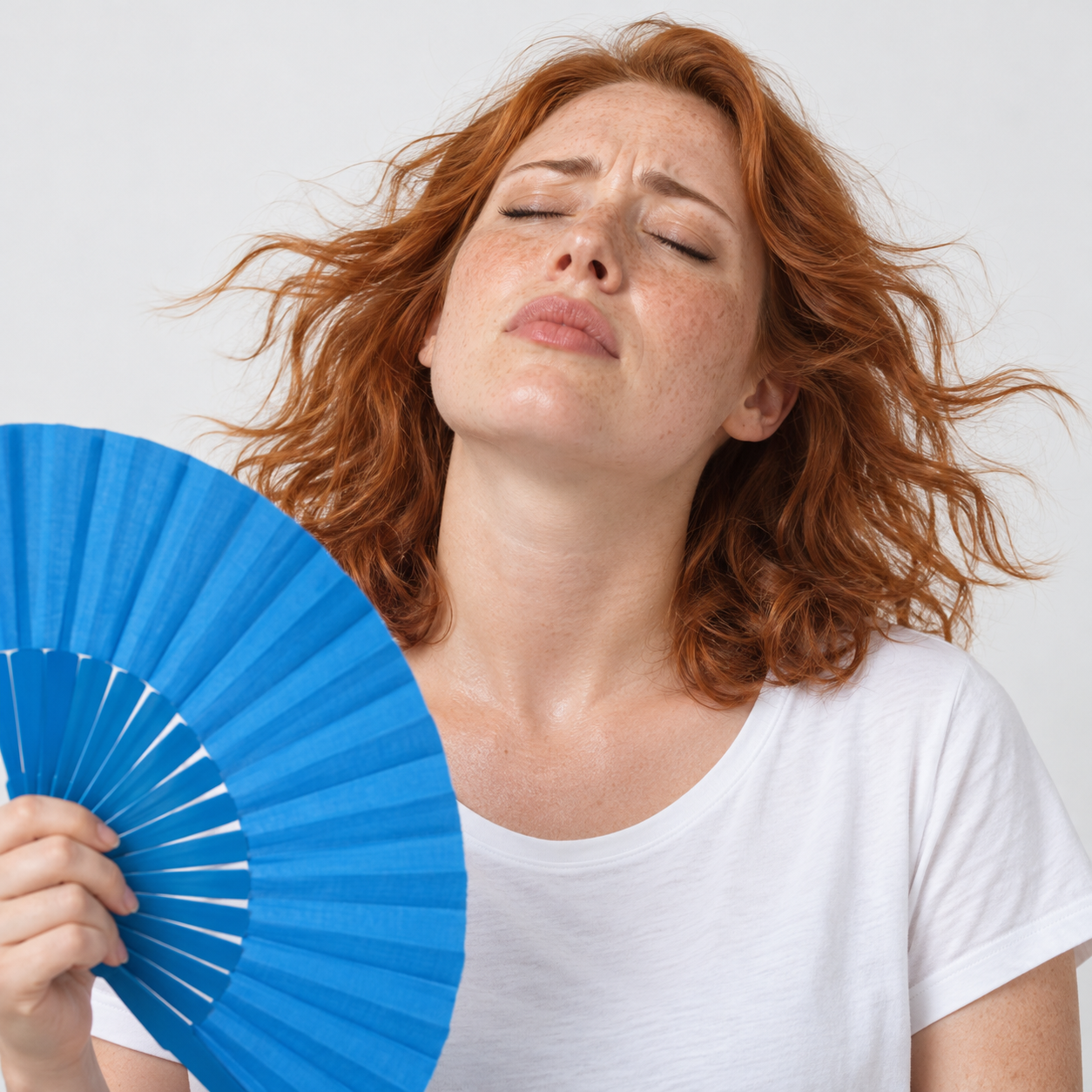
And you know what? Saying "it's hot" is boring. French people? They say "Je crève de chaud!"
Today, I'm going to teach you the 10 expressions French people REALLY use to talk about the heat.
Because speaking like a French person also means talking about the weather like they do.
QUICK DEFINITION
La canicule = a period of extreme heat (at least 3 consecutive days with very hot days and nights)
French people also refer to it as: a heatwave, intense heat, "il y a une chaleur de malade"
10 EXPRESSIONS TO TALK ABOUT A HEATWAVE
EXPRESSION #1: "Il fait chaud" — The Basic Expression
Pronunciation: "Il fay sho"
Example: "Il fait chaud partout en Europe cet été."
Usage:
Casual conversation
"Il fait chaud aujourd'hui, non?"
At work
"Il fait trop chaud pour travailler"
On the phone
"Ici il fait chaud, chez toi?"
REMEMBER:
❌ Never say "Il est chaud" or "C'est chaud" when talking about temperature
❌ Never say "Je suis chaud" — say "J'ai chaud"
✅ "Il fait chaud" = the temperature
✅ "J'ai chaud" = I am feeling hot
EXPRESSION #2: "Je crève de chaud!" — The Most Common Expression
Pronunciation: "Juh kreuv de sho"
Example: "Je crève de chaud aujourd'hui!"
Usage:
Informal. Use it with friends, not with your boss at work.
With friends
"Je crève de chaud, on va à la plage?"
On Instagram
"Je crève de chaud! 🥵"
At a café
"Je crève de chaud, je prends un verre froid"
Why it works:
"Crever" means "to die." Literally, you're saying "I'm dying from the heat." It's exaggerated, which is why it sounds natural and funny.
EXPRESSION #3: "Une chaleur à crever!" — A Common Variation
Pronunciation: "Une shalehr ah kreuv"
Example: "Il fait une chaleur à crever dans ce bureau!"
It's the same as "Je crève de chaud," except you're talking about the heat itself, not yourself.
Describing the temperature
"Quelle chaleur à crever!"
Justifying something
"Il y a une chaleur à crever, on ne sort pas"
At an apéro
"Une chaleur à crever, non?"
EXPRESSION #4: "J'étouffe!" — When It's Heavy and Humid
Pronunciation: "Jé-too-fe"
Example: "Dès que je vais dehors, j'étouffe!"
Meaning: You can barely breathe. Usually because the heat is humid rather than dry.
When to use it:
Humid heat
"C'est dégueulasse, j'étouffe!"
Lack of air
"Il n'y a pas d'air, j'étouffe"
Crowded transport
"Le métro est bondé, j'étouffe"
EXPRESSION #5: "Ça cogne!" or "Ça tape!" — The Sun Is Beating Down
Pronunciation: "Sah kogn" / "Sah tap"
Example: "Mets un chapeau aujourd'hui, ça cogne fort!"
Meaning:
- "Cogner" and "taper" mean "to hit"
- Here, it's the sun that is hitting
- = The sun is extremely strong and hot
Similar expressions:
"Ça cogne fort"
"Le soleil ça cogne fort aujourd'hui"
"Ça tape"
"Dehors, ça tape, c'est dingue"
"Le soleil cogne"
"Attention, le soleil cogne"
EXPRESSION #6: "Il fait lourd" — Right Before a Storm
Pronunciation: "Il fay loor"
Example: "Il fait lourd, je pense qu'il va y avoir un orage."
Meaning:
It's the kind of heat that feels heavy and oppressive. Usually just before a thunderstorm.
Difference between "J'étouffe" and "Il fait lourd":
"J'étouffe"
I can't breathe (because of humidity)
"Il fait lourd"
The heat feels heavy and crushing (often before a storm)
EXPRESSION #7: "Il n'y a pas un pet' de vent!" — Not a Breath of Wind
Pronunciation: "Il nya pa un pé de ven"
Example: "Je sens qu'on va crever de chaud, il n'y a pas un pet' de vent"
Meaning:
Zero wind. Zero breeze. Zero air movement. Which makes the heat feel even worse.
Context:
This is an informal/slang expression. "Pet'" comes from "pétole," a sailing term meaning "no wind."
When to use it:
A windless day
"Il n'y a pas un pet' de vent, c'est étouffant"
At the beach
"Pas de vent, on va fondre"
Completely still weather
"Il n'y a pas un pet' de vent"
EXPRESSION #8: "La chaleur est insoutenable!" — Formal and Powerful
Pronunciation: "Lah shalehr é in-soo-te-na-bl"
Example: "La chaleur est insoutenable aujourd'hui!"
Meaning:
The heat is impossible to tolerate. It's simply too much.
Tone: More formal than "Je crève de chaud" but just as effective.
When to use it:
At work
"Avec cette chaleur insoutenable, j'ai du mal à me concentrer"
In articles/news reports
"La chaleur insoutenable de l'été 2026"
Serious conversations
"Cette chaleur est insoutenable"
EXPRESSION #9: "Je suis en nage!" — I'm Sweating Buckets
Pronunciation: "Juh suis en nahj"
Example: "Avec cette chaleur, je suis en nage!"
Meaning:
"En nage" means covered in sweat. You're sweating heavily.
Context:
Informal but not vulgar. You can use it in most situations.
Real-life examples:
After exercising
"Je sors du gym, je suis en nage"
After a walk
"J'ai marché 20 min, je suis en nage"
At work without air conditioning
"Il n'y a pas d'air ici, je suis en nage"
EXPRESSION #10: "Un soleil de plomb" — A Blazing Sun
Pronunciation: "Un so-lay de plon"
Example: "Il y a un soleil de plomb, je mets mes lunettes de soleil!"
Meaning:
Lead ("plomb") is a very heavy metal. "Un soleil de plomb" describes a heavy, powerful, crushing sun.
When:
- The sky is clear and cloudless
- The sun is extremely strong
- The heat is intense and direct
Examples:
Blue sky
"Quel soleil de plomb!"
On vacation
"Là-bas, c'est soleil de plomb"
Going for a walk
"Attention, soleil de plomb, mets de la crème"
BONUS EXPRESSION: "Je fonds!" — I'm Melting!
Pronunciation: "Juh fon"
Example: "Je fonds à cause de cette chaleur!"
Meaning:
"Fondre" means "to melt." It's a poetic image:
- Like a snowman melting
- Like butter in the sun
- You're sweating so much that you're "melting"
Tone: Informal, funny, and expressive.
When to use it:
Extreme heat
"Je fonds, c'est insoutenable!"
Humorous situations
"Je fonds, on me met au congélateur?"
With friends
"Je fonds! Allons à la plage"
SUMMARY TABLE — The 10 Expressions
1. Il fait chaud — The temperature — Neutral — Everywhere
2. Je crève de chaud — I'm extremely hot — Informal — With friends
3. Une chaleur à crever — It's extremely hot — Informal — Describing the weather
4. J'étouffe — I can't breathe — Genuine feeling — Humid heat
5. Ça cogne / Ça tape — The sun is beating down — Informal — Sunny situations
6. Il fait lourd — Oppressive heat — Descriptive — Before a storm
7. Pas un pet' de vent — No breeze at all — Informal/slang — No wind
8. Insoutenable — Impossible to tolerate — Formal — Articles/work
9. Je suis en nage — I'm sweating heavily — Informal — After effort/heat
10. Soleil de plomb — Blazing sun — Poetic — Clear skies
FAQ: QUESTIONS YOU MAY BE ASKING YOURSELF
Q: Which expressions should I use in everyday life?
A: "Je crève de chaud!" and "Ça cogne!" You'll hear them everywhere in summer. They're by far the most common.
Q: Which expression is the most poetic?
A: "Un soleil de plomb" and "Je fonds." They create very vivid images.
Q: Which expression is the most formal?
A: "La chaleur est insoutenable." It's the safest option for work or more formal situations.
Q: Can I really say "Je crève de chaud" everywhere?
A: With French friends, yes. With your French boss? Maybe not. It's informal.
Q: Which expression is the most slangy?
A: "Il n'y a pas un pet' de vent." That's genuine French slang. Younger people use it a lot.
THE SECRET: It's Not Just Vocabulary, It's CULTURE
Learning these expressions means learning how French people EXPERIENCE the heat.
Because in France, summer is a serious topic. A heatwave isn't just weather. It's a SOCIAL event.
French people talk about it:
- At cafés
- At work
- On social media
- On television
- With friends
And if you use these expressions? French people will notice that you truly understand their culture.
NEXT STEP: Actually Talk About the French Weather
Learning expressions is great. But actually USING them? That's even better.
Le vocabulaire s’ancre mieux quand tu l’utilises.
Pratique le français dans de vrais contextes pour que les bons mots viennent naturellement.
Commencer à pratiquerAnd guess what? I've created a Free 7-Day Challenge specifically for that.
Over 7 days, you'll:
- Master these 10 expressions plus 5 more
- Practice them in real conversations
- Learn how French people REALLY speak
- Build the confidence to talk about the weather naturally
- Join small talk conversations without freezing up
Because the weather is how French people START conversations.