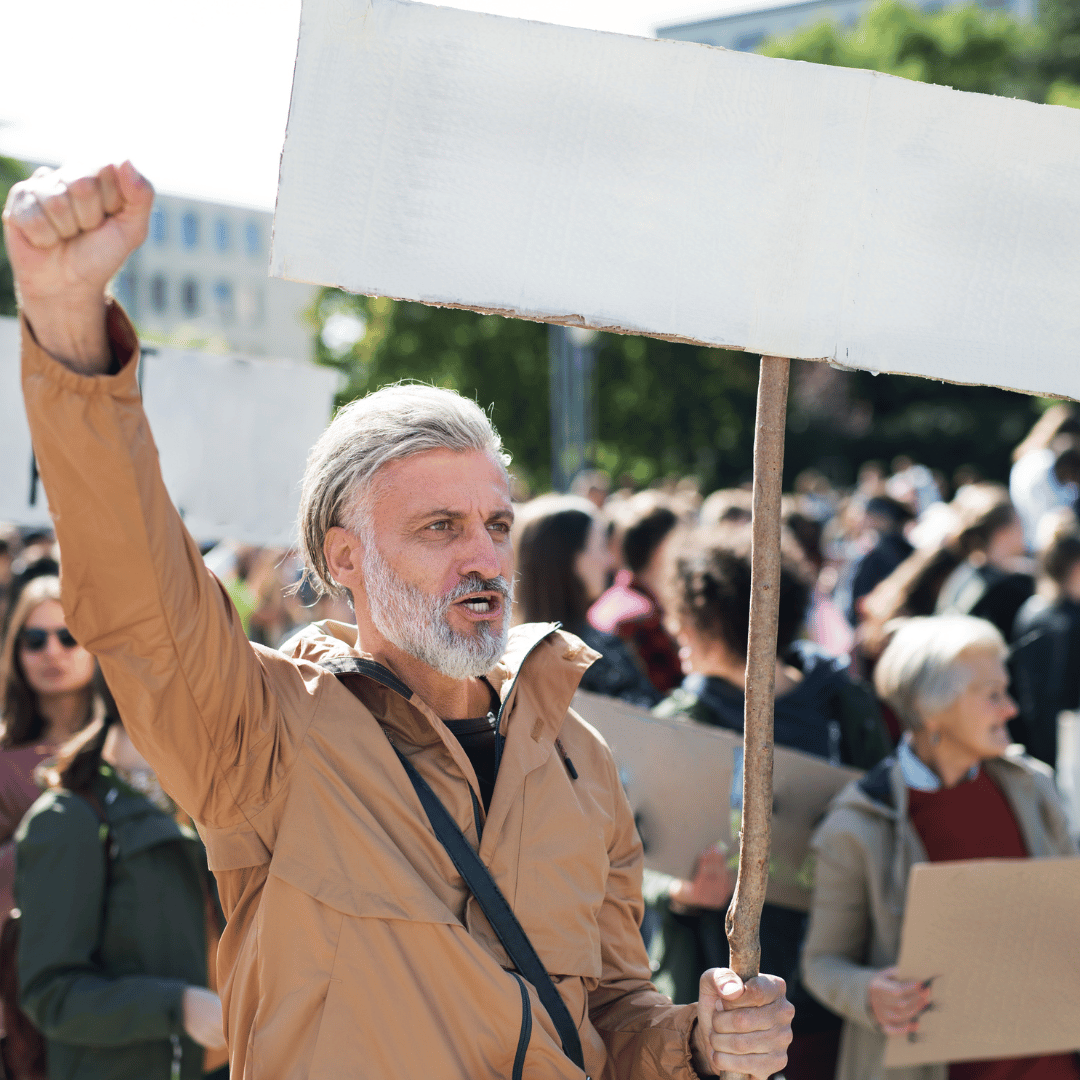
In France, going on strike is part of the social landscape. To such an extent that abroad, people often say: “The French are always on strike!”
But is that really true? Why is this tradition so strong here? And how can we explain that it has become almost part of the national identity?
A bit of history
To understand the strike in France, we have to go back in time.
Feeling comfortable with natives takes more than understanding the culture.
Our learners practice real French with native teachers and gain confidence step by step.
Try it freeBefore the 19th century, going on strike was forbidden. Workers were not allowed to stop working and could be punished for doing so.
👉 In 1864, the Ollivier Law decriminalized striking: it became legal under certain conditions.
👉 In 1946, it entered the Constitution: the right to strike became a fundamental principle of French labor law.
Since then, striking has become an institution in itself — a symbol of the balance of power between citizens and authority.
The major strikes in French history:
-
1936: The strikes of the Popular Front led to the creation of paid holidays and the 40-hour workweek.
-
May 1968: A student movement turned into a general strike involving more than 8 million workers.
-
1995: France was paralyzed for weeks by strikes against Prime Minister Juppé’s pension reform.
-
2023: Once again, pension reforms sparked massive demonstrations and blockades across the country.
Each major movement has marked history and shaped France’s social consciousness.
Why do the French go on strike?
The reasons are many, but some come up again and again:
-
Salaries and purchasing power: when inflation rises, workers demand higher pay.
-
Pensions and social protection: the French welfare model is seen as a valuable legacy.
-
Working conditions: schedules, safety, workload, professional recognition.
-
Perceived injustices in reforms: striking becomes a way to collectively say “no.”
Behind every mobilization lies a strong idea: to defend acquired rights and maintain a balance between workers and institutions.
Who goes on strike?
In France, strikes are often organized by trade unions — even though fewer than 10% of employees are union members.
Their role remains central in mobilizing, coordinating, and negotiating.
The sectors most affected are well known:
-
Transport (SNCF, RATP): the most visible strikes.
-
Education: teachers, high school and university students.
-
Healthcare: hospitals, doctors, nurses.
-
And more broadly, the public sector.
In the private sector, strikes also exist, but they are often less visible.
How the French perceive strikes
French society remains divided.
For some, striking is a source of pride: a symbol of freedom and resistance.
For others, it’s a nuisance: it disrupts transport, closes schools, and complicates daily life.
This paradox is typically French:
👉 People often support the cause... while complaining about the consequences.
Want to understand French culture and speak more naturally?
Go beyond facts and practice the way French is really spoken in everyday life.
Learn moreYounger generations seem less attached to this culture of social conflict, preferring other forms of activism: petitions, social media campaigns, climate strikes, or citizen movements.
Strikes in France and abroad
While strikes exist everywhere, France stands out for their frequency and intensity.
In Germany, strikes are regulated and rare.
In the United Kingdom, unions are strong, but strikes are more limited.
In France, striking is a tradition of direct confrontation with the State, inherited from a long revolutionary history.
It’s a political tool, a way of saying:
“If you don’t listen to us, we’ll block the country.”
It’s not provocation, but rather a deeply rooted form of expression in the national culture.
The impact of strikes
The effects are multiple:
-
On daily life: disrupted transport, closed schools, blocked deliveries.
-
On the economy: loss of productivity, slowdowns in some sectors, but also pressure on the government.
-
On the country’s image: the foreign press loves the topic. “France paralyzed by a strike” is a recurring headline in international newspapers.
Yet paradoxically, these movements also contribute to the image of a politically engaged people, ready to defend their rights.
Useful vocabulary around strikes
Some essential words and expressions:
-
Faire grève → to go on strike.
-
Manifester → to demonstrate.
-
Un piquet de grève → a strike picket line.
-
Une grève générale → a general strike.
-
Un préavis de grève → a strike notice.
-
Revendications → demands or claims.
So, why do the French go on strike?
Because in France, striking is not just a means of pressure: it is a symbol of collective freedom.
It reminds people that social rights, paid holidays, and pensions were not given — they were won through mobilization.
Yes, France is sometimes called “the country of strikes,” but it is also a country where social engagement remains alive.
A country where saying “no” is part of democratic debate.
And if strikes annoy as much as they fascinate, it’s probably because they perfectly reflect the French spirit:
to resist, to debate, and to never stop defending one’s ideas.
Ready to feel more natural with French people?
Join Ohlala French School and practice real-life French with native teachers and structured support.
Start your 7-day free trial